Why We Chose Waterfall-Edge Coping
Great Design Is Defined by the Details.
One of the first things people notice about a Modul pool isn't the size.
It isn't the water.
It isn't even the shape.
It's the edge.
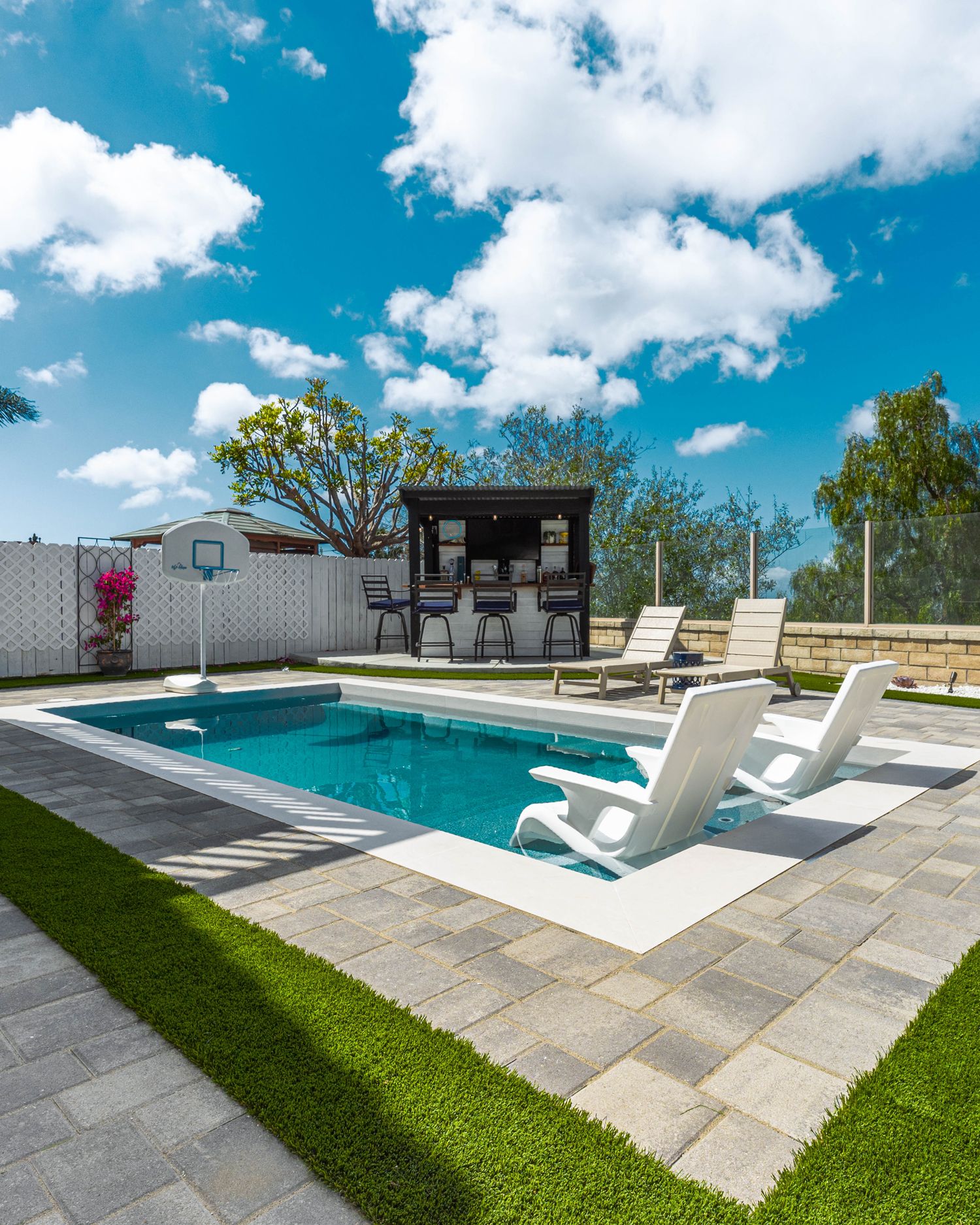
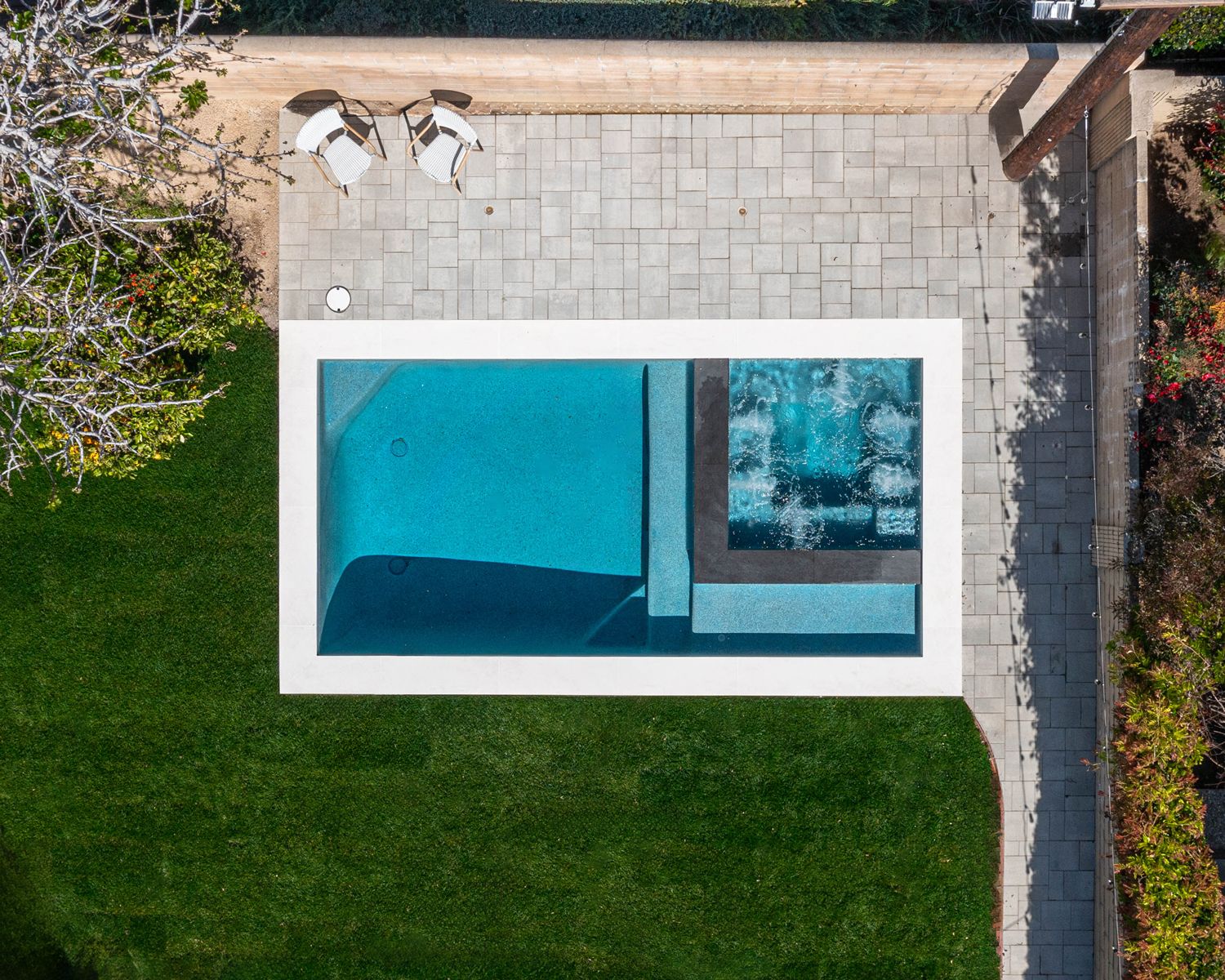
The clean, seamless transition where the coping meets the tile creates a distinctly modern appearance that immediately feels different from traditional pool construction.
While many homeowners don't know the technical name for it, they often know exactly what they're seeing.
It feels cleaner.
More refined.
More architectural.
That detail is called waterfall-edge coping, and it's one of the defining characteristics of every Modul pool.
What Is Waterfall-Edge Coping?
Traditional pool construction typically uses two separate materials around the top of the pool.
A coping material sits on top of the pool wall.
A separate waterline tile begins below it.
The transition between those two materials creates a visible horizontal break around the entire pool.
With waterfall-edge coping, the design is completely different.
Instead of stopping at the edge, the premium porcelain coping is precision-mitered at a 45-degree angle, and the matching porcelain tile continues vertically down to the waterline.
The result is a continuous architectural edge that appears clean, seamless, and intentional.
Rather than looking like multiple pieces assembled together, it feels like one unified design.
Why We Chose This Detail
At Modul, every design decision starts with one question:
"Will this create a better long-term result?"
Waterfall-edge coping checked every box.
It complements modern architecture.
It creates cleaner lines.
It highlights craftsmanship.
It gives every pool a refined appearance without relying on unnecessary ornamentation.
Most importantly, it creates a timeless aesthetic that feels just as relevant years from now as it does today.
Modern Architecture Is About Simplicity
One of the biggest misconceptions about luxury design is that it's created by adding more.
More stone.
More texture.
More decorative elements.
Modern architecture takes a different approach.
It removes visual clutter.
It emphasizes proportion.
It celebrates clean lines and precise detailing.
Waterfall-edge coping perfectly reflects that philosophy.
It doesn't call attention to itself.
It simply makes the entire pool feel more cohesive.
Precision Matters
This detail isn't just about the material.
It's about the craftsmanship.
Every mitered corner.
Every alignment.
Every transition.
Every joint.
Small imperfections become much more noticeable in clean architectural design.
That's why waterfall-edge coping requires careful planning, precision installation, and meticulous attention to detail.
For us, that's part of what makes it special.
Traditional Split Coping vs. Waterfall-Edge Coping
Traditional split coping has been used successfully for decades and remains a common construction method throughout the industry.
It typically combines natural stone, precast concrete, or poured-in-place concrete coping with a separate ceramic or glass waterline tile.
There's nothing inherently wrong with this approach.
It's proven, functional, and familiar.
At Modul, however, we wanted something that better reflected our modern design philosophy.
By using premium porcelain coping with matching vertical porcelain tile, we create a cleaner visual transition that complements today's contemporary homes.
The difference isn't about right versus wrong.
It's about architectural style.
A Small Detail That Changes Everything
Luxury often isn't defined by dramatic features.
It's defined by subtle ones.
The way light reflects across a clean edge.
The consistency of every line.
The precision of every corner.
Those details may seem small individually.
Together, they completely change how a backyard feels.
That's why waterfall-edge coping has become one of the defining elements of every Modul pool.
Because sometimes the smallest details create the biggest impact.
Frequently Asked Questions
What is waterfall-edge coping?
Waterfall-edge coping uses precision-mitered porcelain coping with matching porcelain tile that continues vertically down the pool wall, creating a clean, seamless architectural appearance.
Is waterfall-edge coping stronger than traditional coping?
Both methods can provide excellent long-term performance when installed correctly. The primary difference is architectural style, material selection, and the level of craftsmanship required to execute the detail.
Why does Modul use porcelain coping?
Porcelain complements modern architecture, provides a refined appearance, and allows us to achieve the clean, continuous detailing that defines the Modul Standard™.
Is traditional split coping outdated?
Traditional split coping remains a proven construction method and continues to be widely used. We chose waterfall-edge coping because it better reflects the timeless, modern architectural aesthetic that defines every Modul pool.
Ready to Start Your Modul Pool Project?
Request a consultation today to learn more about your options.