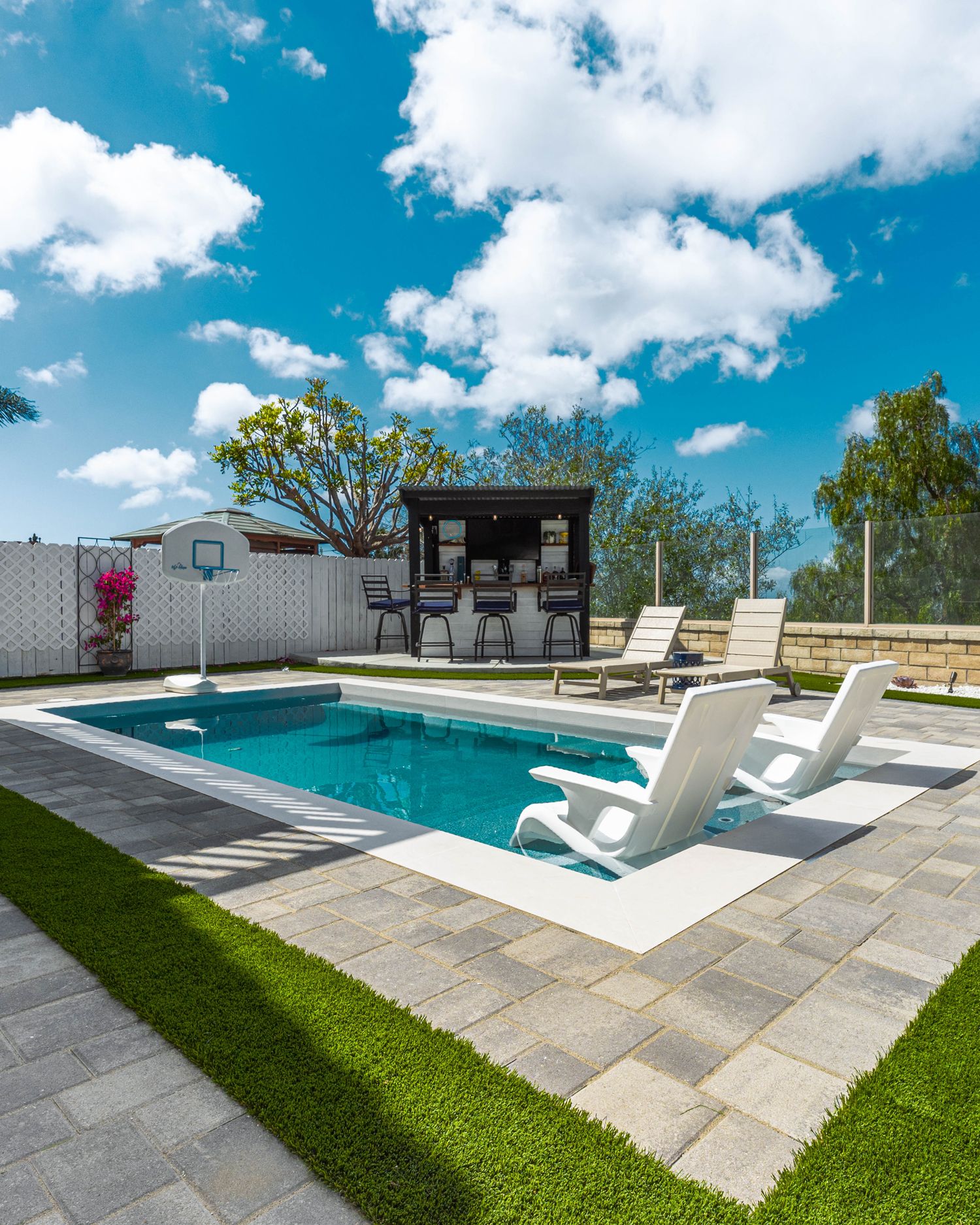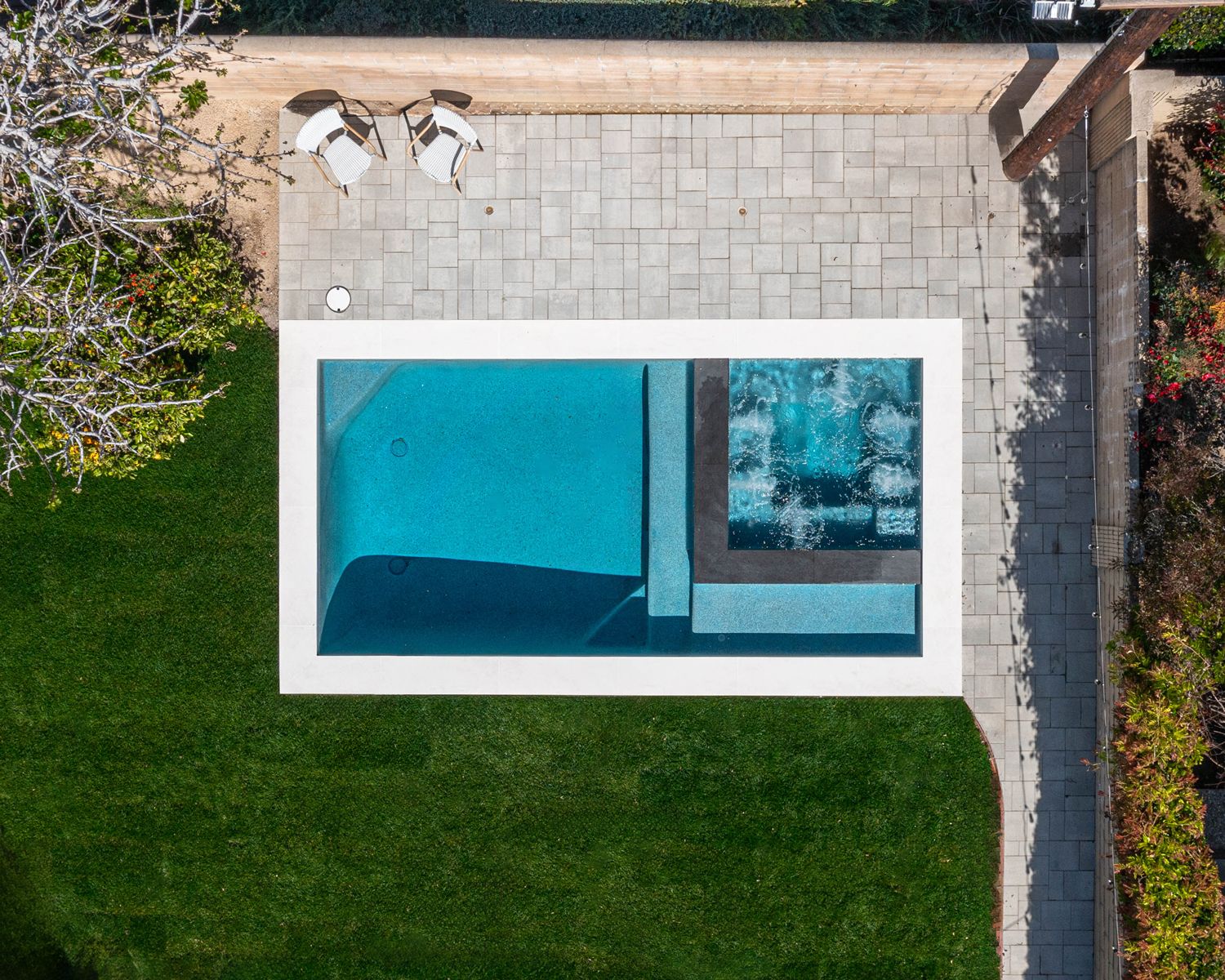
Porcelain vs. Natural Stone Pool Coping
Two Beautiful Materials. Two Very Different Design Philosophies.
Pool coping does much more than finish the edge of a swimming pool.
It defines the transition between the water and the surrounding outdoor space.
It's one of the first architectural details people notice.
And it has a significant influence on how a pool looks, feels, and performs over time.
For years, natural stone has been the traditional choice for luxury swimming pools.
Today, porcelain has become an increasingly popular material for modern homes because it offers a different combination of aesthetics, durability, and performance.
Both are excellent materials.
The right choice depends on the design philosophy behind the project.
What Is Pool Coping?
Pool coping is the finished edge around the top perimeter of a swimming pool.
It serves several important purposes:
- Creates a finished architectural edge
- Protects the pool shell
- Directs water away from the pool
- Provides a comfortable walking surface
- Visually connects the pool to the surrounding outdoor space
Because it's one of the most visible components of a swimming pool, coping plays a major role in the overall design.
Natural Stone
Natural stone has been used in pool construction for decades.
Materials like travertine, limestone, and granite offer organic textures and natural color variation that many homeowners appreciate.
Every piece of stone is unique, giving each installation its own character.
Natural stone is an excellent choice for traditional, Mediterranean, Tuscan, and transitional architectural styles where warmth and natural texture are desired.
Porcelain
Porcelain represents a more contemporary design approach.
Manufactured under extremely high temperatures, premium porcelain is exceptionally dense, durable, and consistent in appearance.
Rather than emphasizing natural variation, porcelain celebrates precision.
Clean edges.
Consistent color.
Refined texture.
Minimal visual interruption.
Those qualities have made porcelain increasingly popular in modern residential architecture.
Appearance
The biggest difference between the two materials is visual.
Natural stone creates warmth and organic character.
Porcelain creates precision and simplicity.
Neither approach is inherently better.
They simply support different architectural styles.
At Modul, our design philosophy centers around clean lines and timeless modern architecture, making porcelain the natural choice for our pools.
Durability
Both materials can provide excellent long-term performance when properly installed.
Porcelain offers several practical advantages.
Because it's extremely dense and non-porous, porcelain is highly resistant to staining, moisture absorption, fading, and many environmental conditions.
Natural stone remains durable as well but generally requires more ongoing sealing and maintenance depending on the specific material selected.
Maintenance
Natural stone often benefits from periodic sealing to help preserve its appearance and reduce staining.
Porcelain typically requires less routine maintenance because of its non-porous surface.
For many homeowners, this lower-maintenance ownership experience is one of porcelain's biggest advantages.
Precision Matters
One of the reasons Modul uses porcelain is the level of precision it allows.
Our signature waterfall-edge coping detail relies on accurately mitered edges that create a seamless transition from the coping to the vertical porcelain tile below.
That level of consistency is difficult to achieve with many natural stone materials.
Porcelain allows us to execute the clean architectural detailing that has become one of the defining characteristics of every Modul pool.
Which Material Is Right for You?
The answer depends on the style you're trying to create.
If your home embraces traditional architecture with natural textures and organic materials, natural stone may be the perfect fit.
If your home features contemporary architecture, clean lines, and modern detailing, porcelain often provides a more cohesive aesthetic.
Neither material is universally superior.
Each simply supports a different design philosophy.
Why Modul Chose Porcelain
At Modul, every design decision begins with one question:
"Does this support timeless modern architecture?"
Porcelain consistently aligns with that philosophy.
Its precision, durability, refined appearance, and ability to create our signature waterfall-edge detail made it the clear choice for the pools we build.
It's one more example of how every material used in a Modul pool has been selected intentionally—not simply because it's different, but because it supports the standard we've chosen to build around.
Frequently Asked Questions
Is porcelain better than natural stone?
Both materials are excellent. Porcelain is often chosen for modern architectural projects because of its clean appearance, consistency, durability, and lower maintenance requirements. Natural stone remains a beautiful option for more traditional design styles.
Does porcelain get hotter than natural stone?
Surface temperature depends on the specific product, color, sun exposure, and surrounding environment. Some lighter-colored porcelain products can perform similarly to natural stone, while darker materials of either type may retain more heat.
Does porcelain require sealing?
Most premium porcelain products do not require sealing because they are non-porous and highly resistant to moisture absorption and staining.
Why does Modul use porcelain?
Porcelain aligns with our modern architectural philosophy, provides exceptional durability, requires minimal maintenance, and allows us to create the clean waterfall-edge coping detail that defines every Modul pool.
Ready to Start Your Modul Pool Project?
Request a consultation today to learn more about your options.